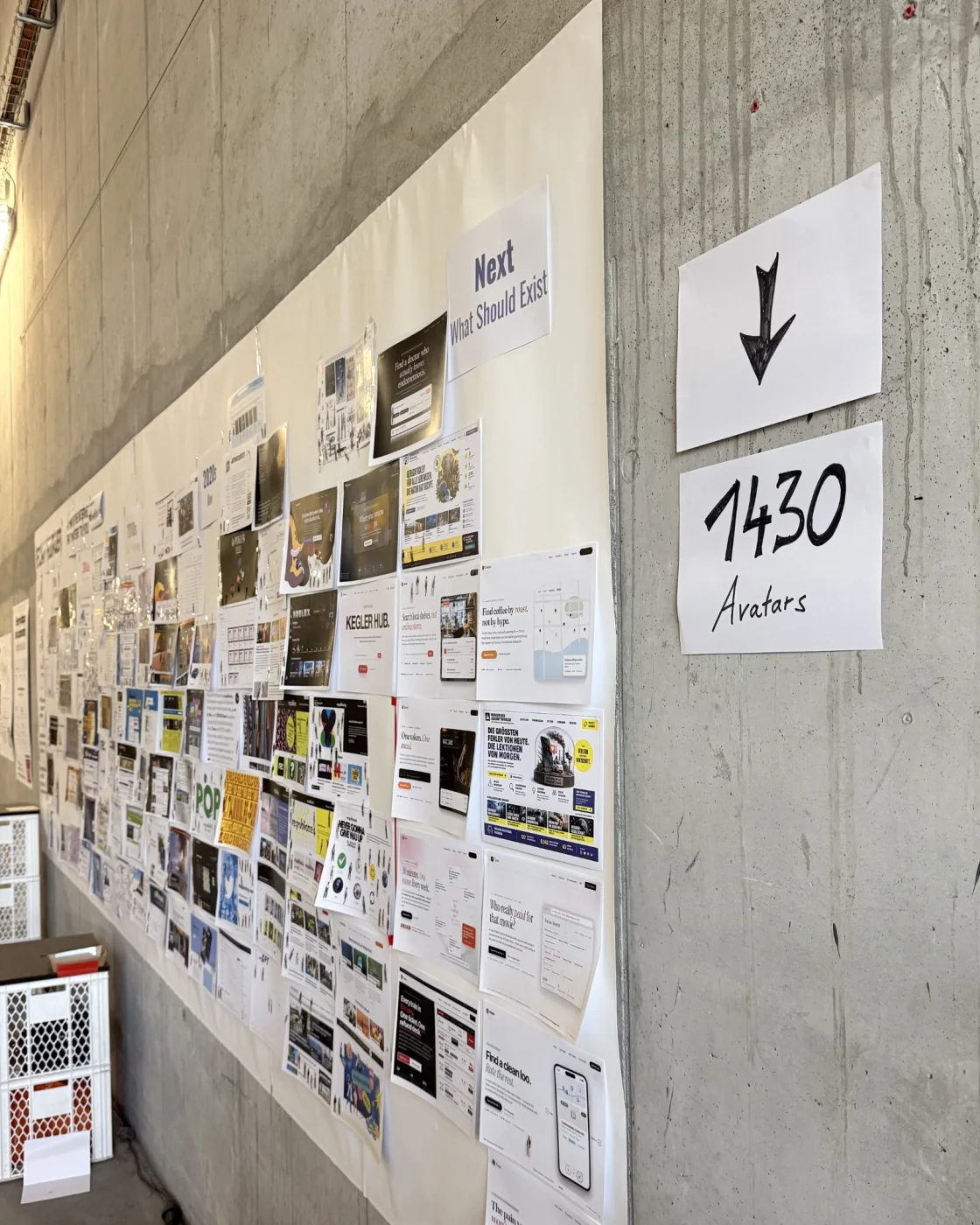
1,430 avatars,
three days, one wall.
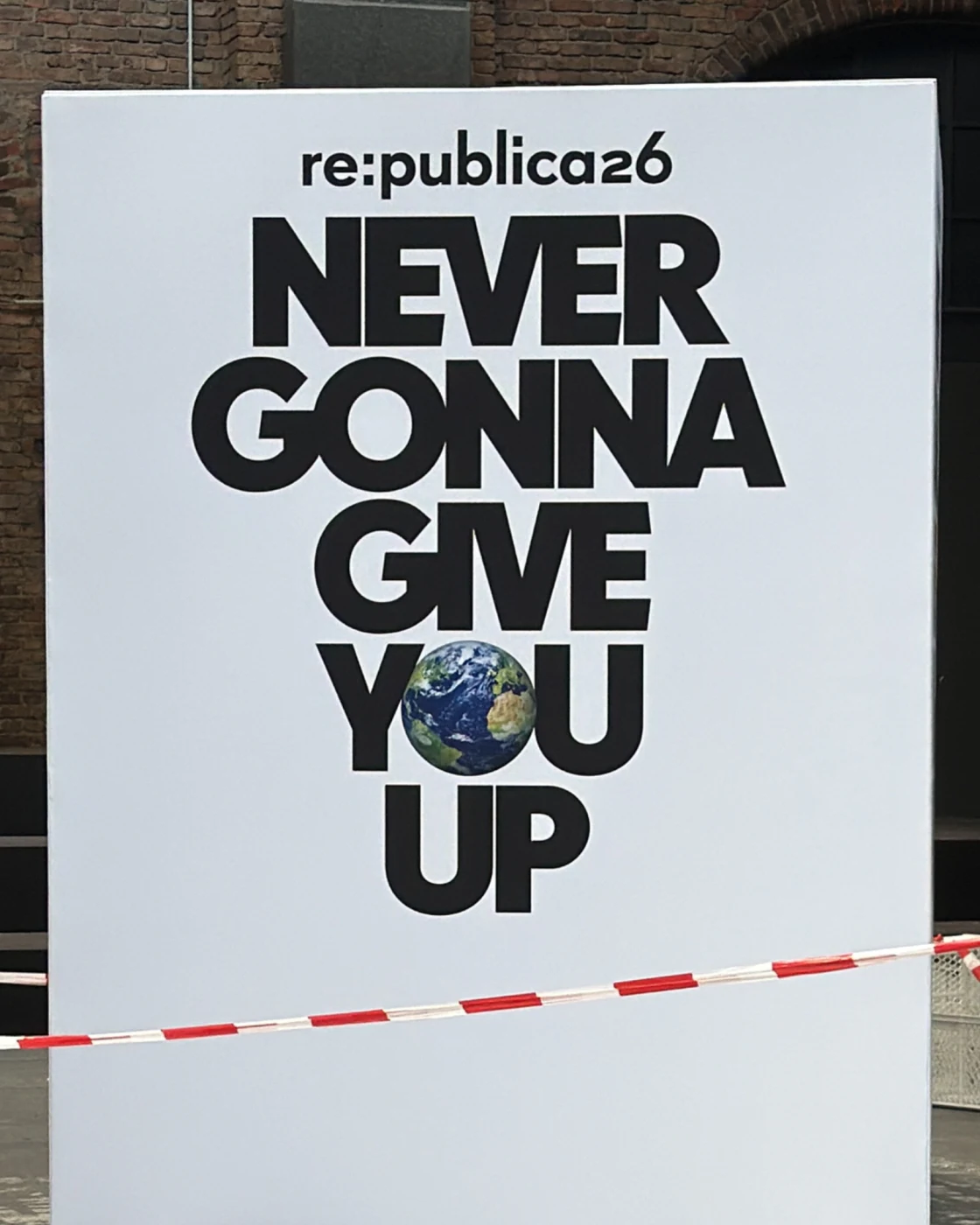
This year's re:publica in Berlin — the festival for digital society and community — ran under a motto everyone recognized instantly: never gonna give you up. An earworm, an internet phenomenon, and, it turns out, a pretty good brief. So we took it literally and built a hands-on experiment around one simple claim: behind every website, there is a community — and it comes alive the moment you can see it.
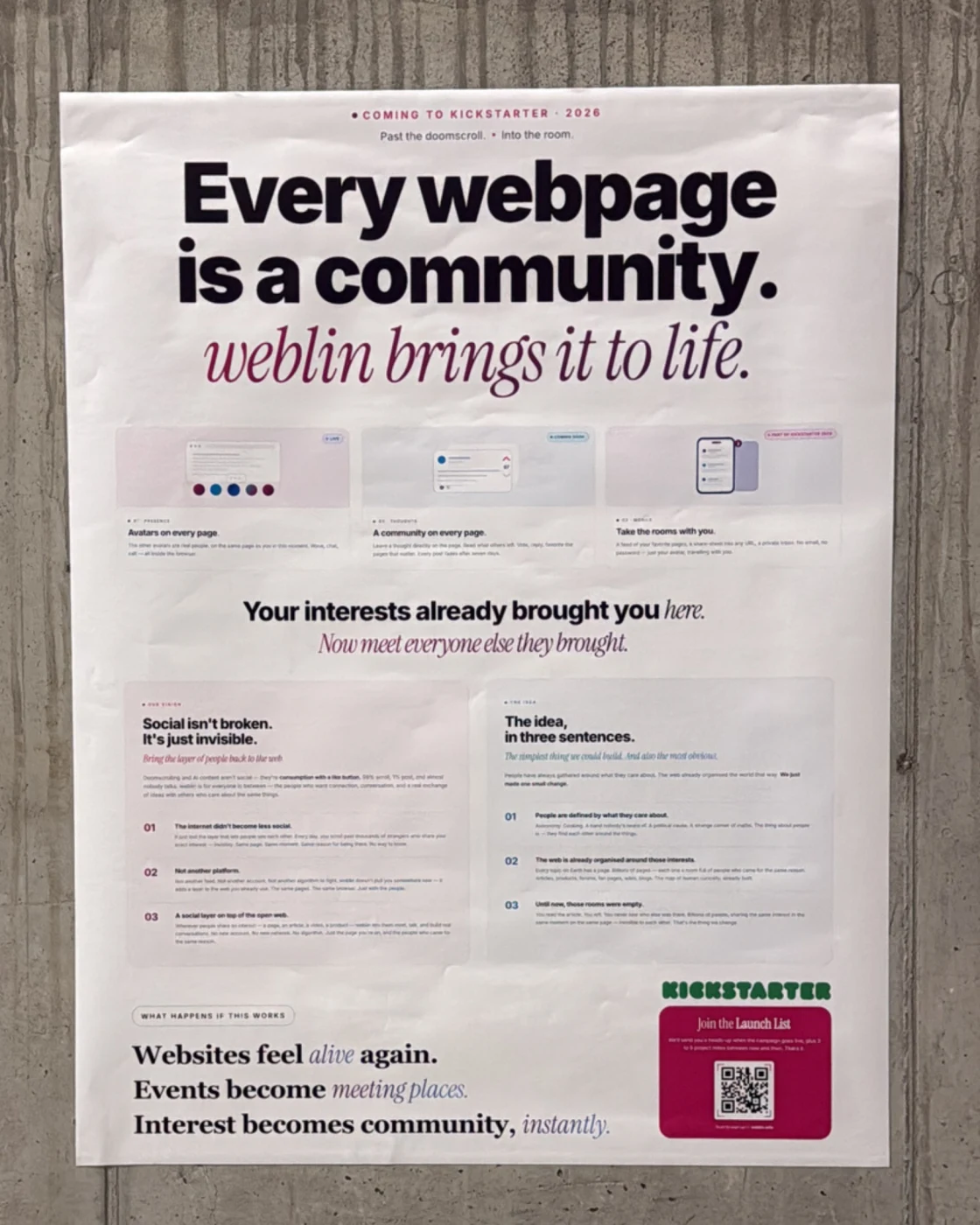
That, more or less, is the whole idea of weblin.
30 years of the web, on a wall
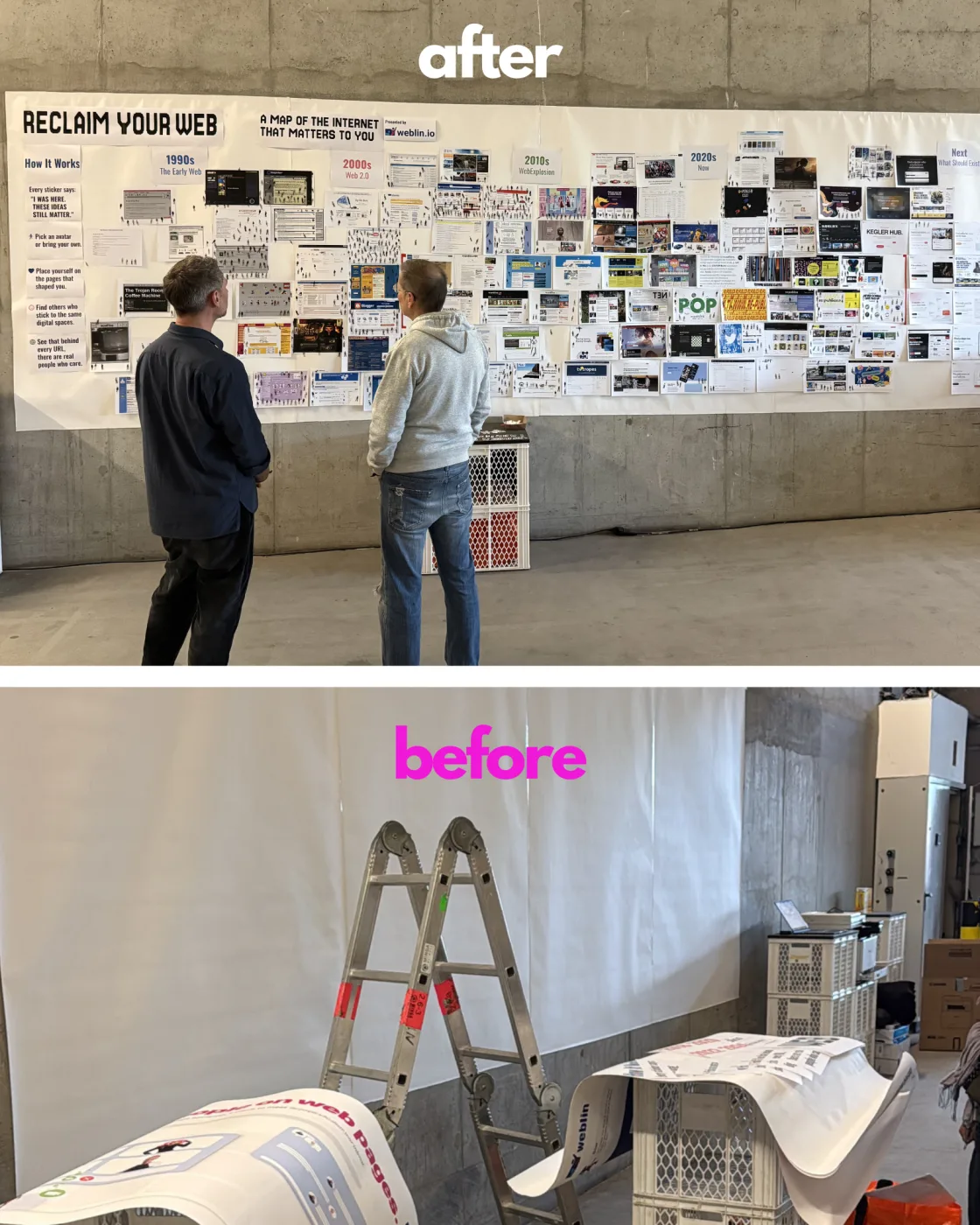
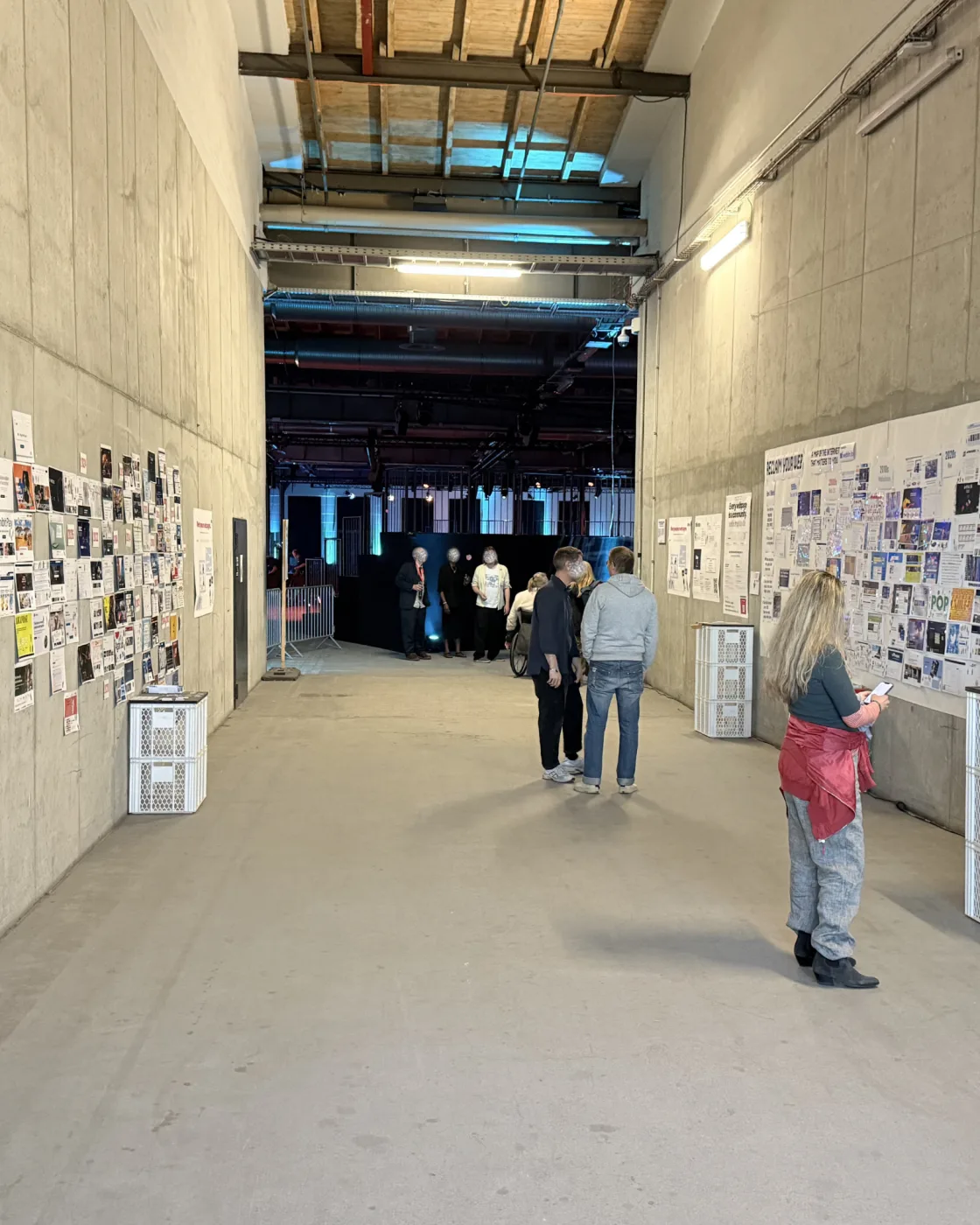
We printed websites from the last three decades and pinned them up in chronological order — from the early, hand-built web through the forum era, the blog era, the platform era, all the way to today. A timeline you could walk along. When we started, it was an empty wall and a ladder. By day three, it was a dense, living map of the web's memory.
Pick an avatar. Stick it on the web.
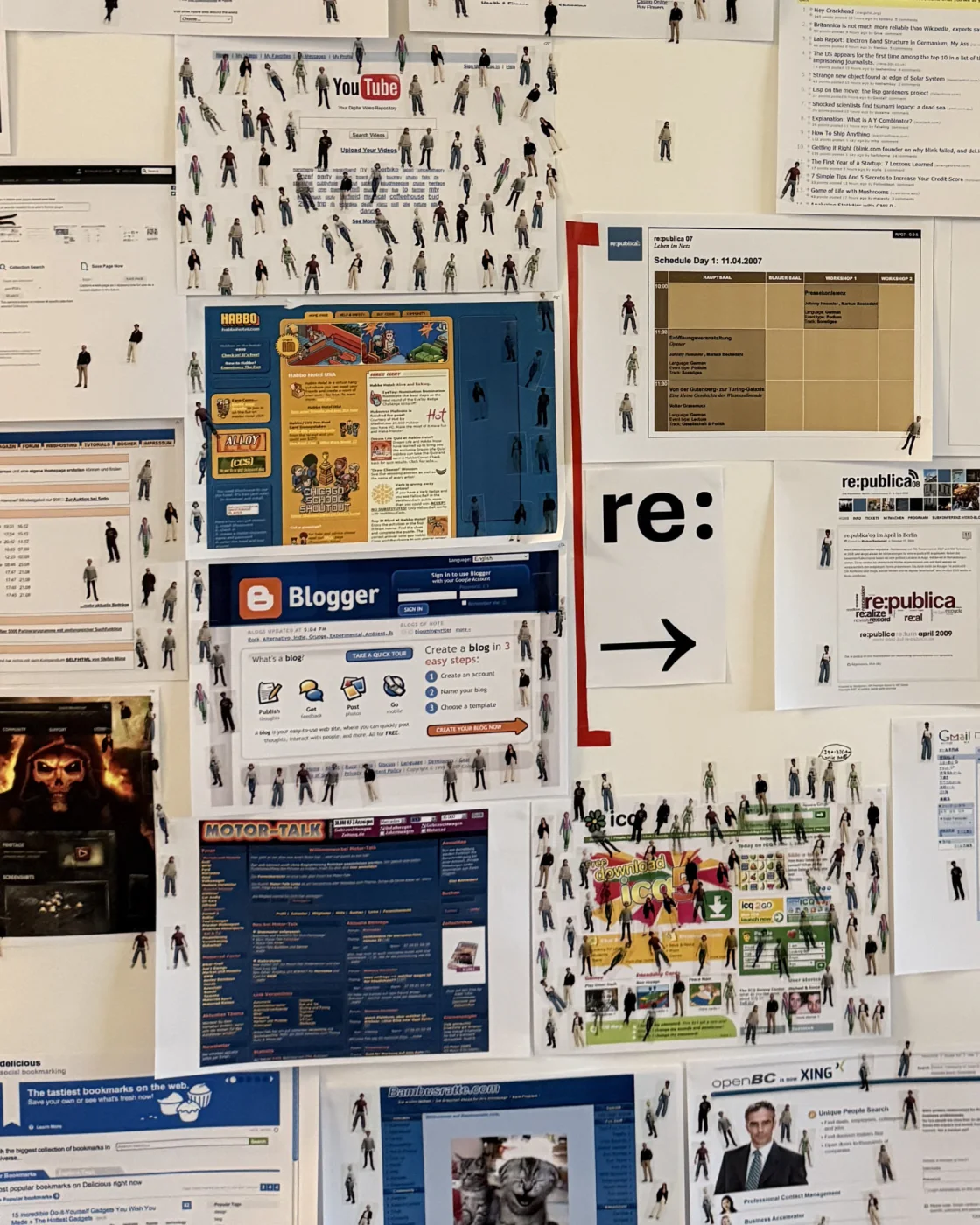
Here's where it became a community thing. Every visitor picked an avatar sticker — a small printed figure of a person — and placed it on the websites they have a connection to. The forum where they found their people. The blog that proved they weren't alone. The site that shaped them.
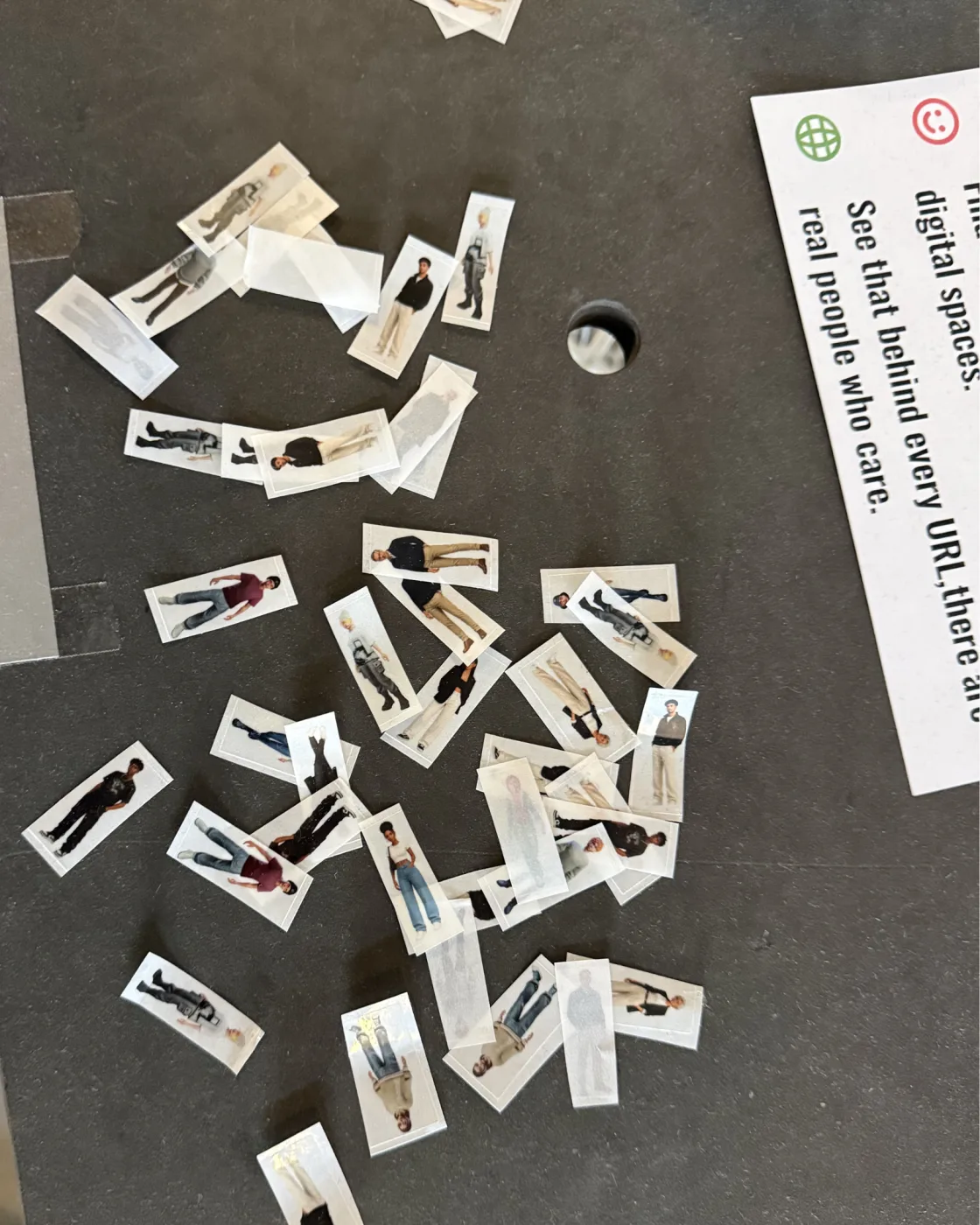
And then the point made itself. Sticker by sticker, the old pages filled up with people. YouTube. Blogger. The early-2000s web. You could suddenly see the thing weblin keeps insisting on: you were never alone on the pages you love — you just couldn't see anyone else there.
Print what's missing. Build what doesn't exist yet.
Two more stations turned visitors from spectators into contributors. Was a website missing from the timeline? You could print it and add it yourself. Had an idea for something that should exist but doesn't? You could generate a brand-new website with AI, right there on the spot, and pin your version of the future to the wall.
1,430 avatars
Over three days, people kept coming, kept sticking, kept adding themselves to the web. The final count:
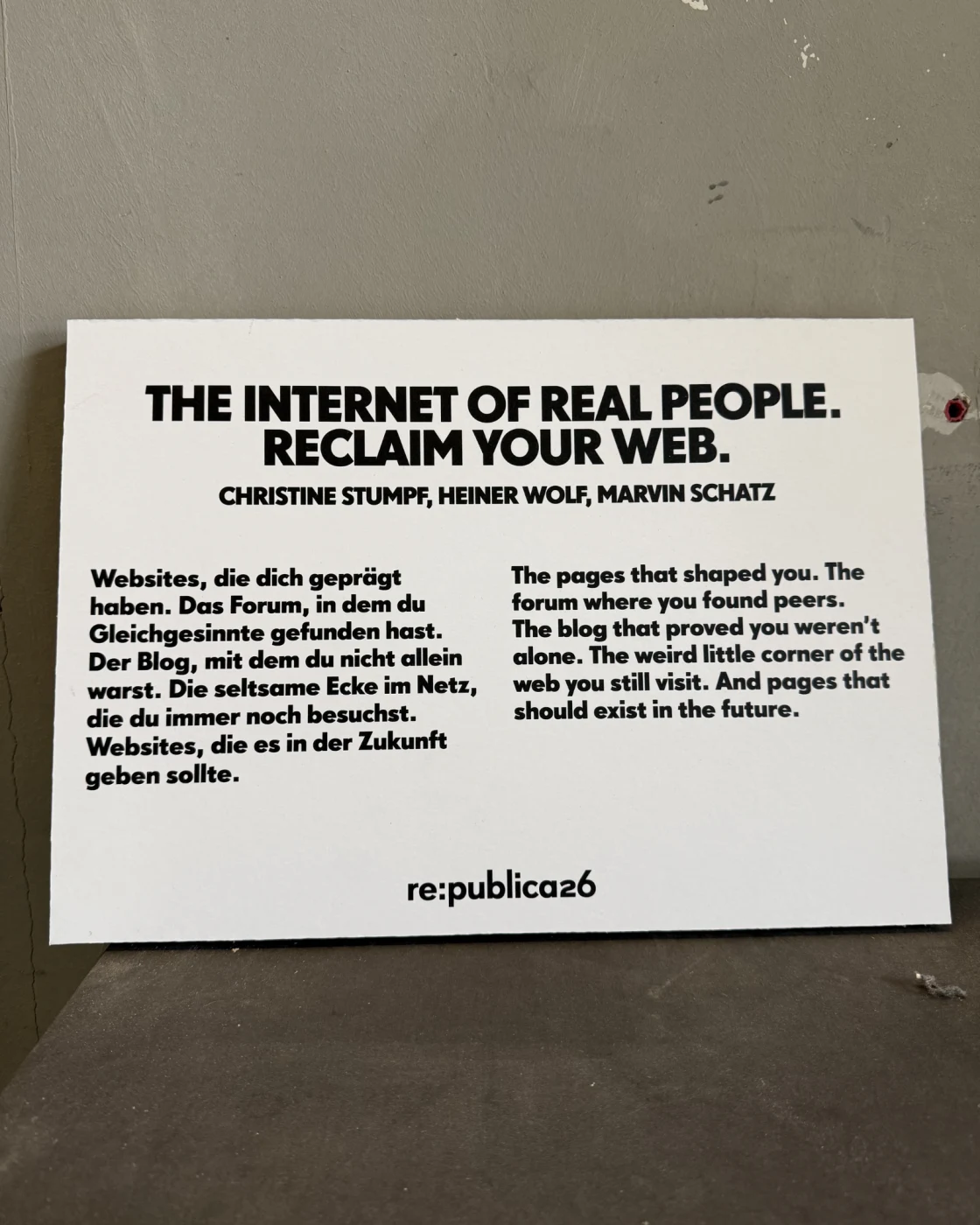
The pages that shaped you. The forum where you found your peers. The blog that proved you weren't alone. The weird little corner of the web you still visit. Reclaim your web.
Why a wall of paper proves a digital point
The installation was deliberately analog, because the point is hard to feel in the abstract. On the open web, presence is invisible by default: you open a page, you're alone, you leave. Putting it on a wall — paper, stickers, your own hand placing your own avatar next to someone else's — made the missing layer suddenly, physically obvious. That layer is exactly what weblin adds back to the real web: a browser extension that shows who else is on the same URL as you, right now, so a webpage can be a place again instead of an empty reading room.
To everyone who walked the wall, picked a sticker, printed a missing page, or dreamed up a website that should exist: thank you. 1,430 times. You made the web feel human again for three days — which is the entire reason weblin exists in the first place.