Eight long-form pieces on web architecture, presence, third places, and what kind of internet we could still build.
The early web had places — forums that felt like local pubs, IRC channels where you knew who was around. Then platforms replaced rooms with feeds. An essay on what we lost, why presence is not nostalgia, and how to bring it back without rebuilding the web.
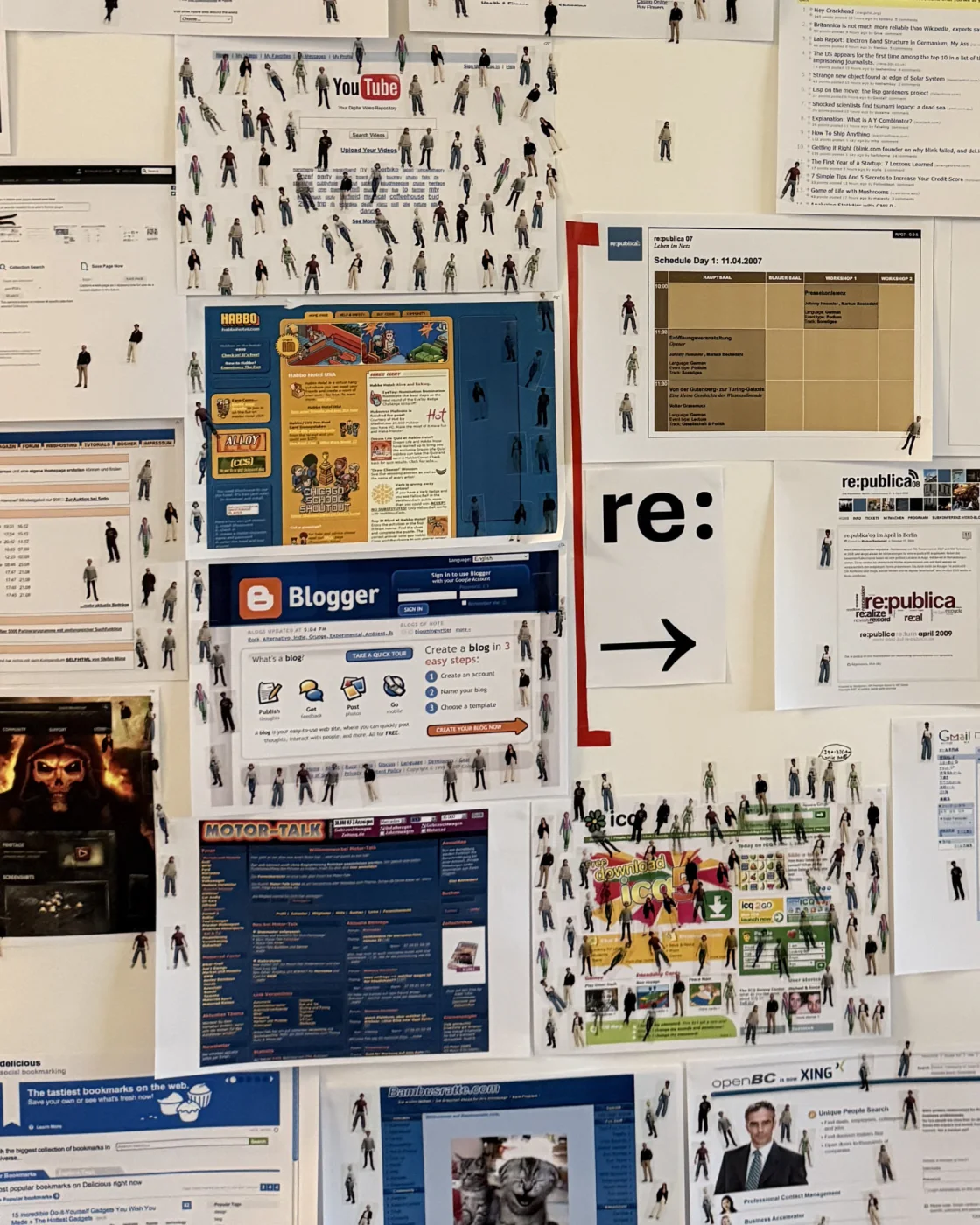
Read the featured essay →We put 30 years of the web on a wall and let visitors stick an avatar on the sites they love — then print what's missing and build what doesn't exist yet with AI. A field note on making the web's hidden communities visible.
Read the field note →An AI talks to a million people simultaneously, with the same attention you get. Co-presence works differently — and the difference isn't quality, it's structure.
Read →Ray Oldenburg called them third places: anchors of social life beyond home and work. The web has feeds. Feeds aren't third places.
Read →You think you choose what you see. You don't. There's another web underneath — quieter, chronological, and it has always been there.
Read →No algorithm, no ads, open source, you can leave. What each of these costs — and why we made them anyway.
Read →Communities don't die because people stop caring — they die because they were built on borrowed ground.
Read →Platforms didn't replace the web — they layered themselves on top of it, replacing the logic of place with the logic of a channel.
Read →Endless feed, engagement algorithm, push triggers — three design decisions that together produce what we tend to blame on ourselves.
Read →